On
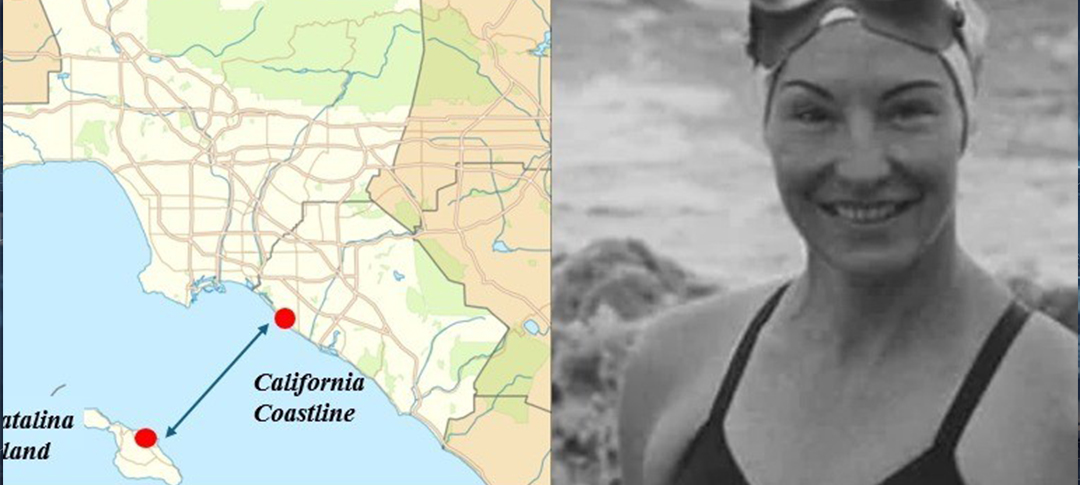
July 4, 1952, Florence Chadwick, an American long-distance swimmer, attempted to be the
first woman to swim the 26-mile channel from Catalina Island to the California coast. Chadwick was no stranger to extreme endurance; she had already earned global recognition as the first woman to swim the English Channel in both directions. The Catalina Channel, however, presented an unforeseen adversary: a dense, chilling fog that descended shortly after she began, reducing visibility to mere feet.
For 15 hours, Chadwick battled the frigid water, strong currents, and profound isolation. The fog was so thick that she could not see the support boats trailing her, let alone the distant California shoreline. Her mother and trainer were in a nearby boat, shouting words of encouragement and reporting that she was nearing her destination. Despite their assurances, the overwhelming sensation of being in a vast, featureless expanse, coupled with extreme fatigue, led Chadwick to a critical decision. Unable to perceive any progress or see her ultimate goal, she signaled to be
pulled from the water.
Once aboard the boat, the
devastating truth was revealed: she had stopped just
half a mile from the California coast. At a subsequent press conference, a somber Chadwick reflected, “I’m not excusing myself, but
if I could have seen the land, I might have made it.” Her physical capacity was immense, but the psychological burden of an invisible finish line proved too great.
Psychological Concepts at Play:
- The Goal Gradient Effect: This principle, observed in human and animal behavior, posits that the tendency to approach a goal increases with perceived proximity to it. When the fog obscured the California coastline, Chadwick lost the crucial visual cue needed to activate this motivational surge. The perceived distance became infinite, effectively removing the “pull” of the nearing finish line.
-
Cognitive Fatigue and Loss Aversion: Prolonged effort without visible progress can lead to significant cognitive fatigue. In such a state, the brain becomes more susceptible to loss aversion, a bias where the pain of losing is psychologically more powerful than the pleasure of gaining. Continuing to swim without any perceived progress felt like a continuous “loss” of energy with no clear return, making giving up seem like the rational choice to stop the perceived drain.
- Lack of Feedback and Learned Helplessness (Situational): The absence of clear, continuous feedback on her progress (due to the fog) contributed to a feeling of being adrift. While not full-blown learned helplessness, the situational inability to influence or even see her progress created a sense of powerlessness against the overwhelming elements.
Two months after her initial attempt, Florence Chadwick returned to the Catalina Channel. The conditions were strikingly similar: the water was cold, and the fog was once again dense. However, Chadwick’s mental approach had fundamentally changed. She applied a powerful psychological technique:
Visualization.
- Cultivating an Internal “Finish Line” (Visualization): Throughout her second swim, Chadwick maintained a clear, vivid mental image of the California coastline. This internal representation served as a constant “finish line,” providing the psychological feedback that the external environment denied her. By replacing the actual, obscured visual cue with a simulated one, she reactivated the Goal Gradient Effect internally.
- Micro-Goals and Process Focus: Although the primary strategy was visualization, the act of consistently focusing on the next stroke, the next few yards, rather than the entire 26 miles, likely also played a role. This breaks down an overwhelming task into manageable, “winnable” segments, providing a series of internal micro-goals.
- Trusting the Plan (Pre-commitment): Her decision to return, fully aware of the potential for fog, indicated a strong pre-commitment to the goal. This mental preparation helped her to override the immediate discomfort and lack of visual feedback during the swim itself.
Chadwick not only completed the swim on her second attempt but did so in 13 hours and 47 minutes,
shaving two hours off the existing men’s world record.
Florence Chadwick’s story is a profound reminder that true limits are often psychological, not just physical. When faced with the “fog” in your own life- where goals seem distant, progress invisible, and motivation wanes—remember that your internal vision is your most powerful compass. Trust your process, maintain a clear mental image of your destination, and keep pushing. The land is often far closer than the mist allows you to see.