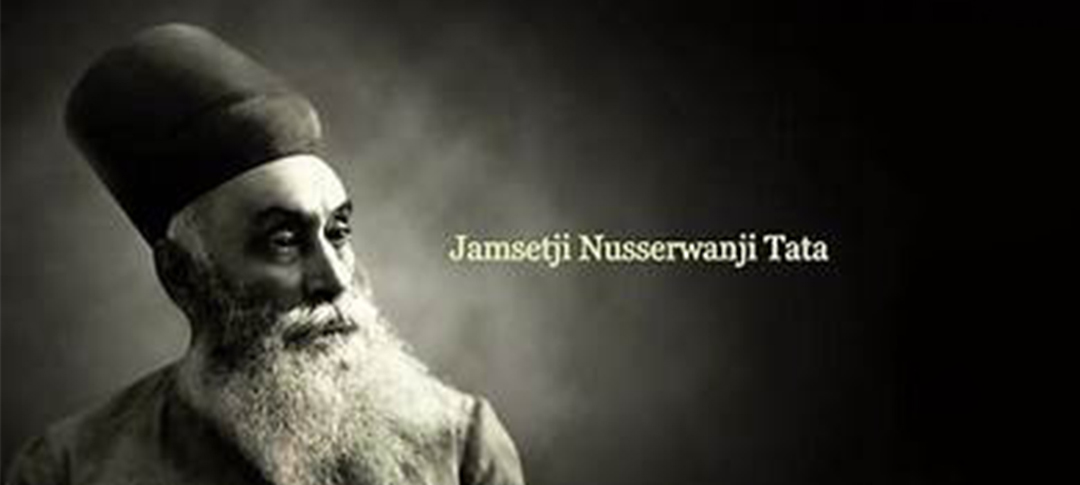
Lessons from the Life of Jamsetji Nusserwanji Tata (1839–1904): The Legendary "Father of Indian Industry"
Today, March 3rd, is a day that resonates deeply with me, no matter which part of the world I am and I’m sure it does with so many of you too, who have had the great fortune of being associated with the city and it’s ethos – Jamshedpur or TATANAGAR.
Growing up in Jamshedpur, we understood this date -Founder’s Day—wasn’t just a holiday; it was a city-wide celebration of a vision that literally built the ground I walked on. As the Jubilee Park lights up in a breathtaking tribute, I find myself reflecting on the man who started it all: Jamsetji Nusserwanji Tata.
Being a “Steel City” native has shaped my understanding of leadership. To me, Jamsetji’s legacy is the ultimate masterclass in leadership and here’s my take specifically on three traits of the many that we can attribute to the legend, namely, Strategic Thinking, Emotional Intelligence, and Radical Collaboration.
Strategic Thinking: In Jamshedpur, we live inside Jamsetji’s mind. Long before the first brick was laid, he drafted a letter to his son, Dorab, detailing wide streets planted with shady trees, plenty of space for lawns, and large areas for football and hockey. He planned more than just a factory; he planned a human ecosystem. He saw that for an industry to survive centuries, it needed ‘enablers’—Steel, Power, and Education.
My takeaway: Visionary strategy isn’t about the next quarter; it’s about the next century. Real leaders build foundations they may never personally stand upon.
Emotional Intelligence (EQ): Walking through the Tata Main Hospital or the clean colonies of my hometown, I see Jamsetji’s EQ in action. In the late 1800s, while the world exploited labour, he introduced an eight-hour workday and provident funds. He understood a fundamental truth of human mind – An organization’s heartbeat is the dignity of its people. He led with empathy because he saw his workers not as “assets,” but as partners in nation-building.
My takeaway: High EQ creates a culture of psychological safety. When people feel valued as humans, they don’t just work for a paycheck- they work for a mission.
Radical Collaboration: Jamsetji was the ultimate collaborator. To build what would become Tata Steel, he didn’t rely on guesswork instead he travelled to Pittsburgh to consult with the world’s best engineers. He was never too proud to seek expertise, proving that leadership isn’t about having all the answers, but about bringing the right minds together to solve the biggest problems.
My takeaway: True leaders are curators of talent. They bridge the gap between “What is” and “What could be” by inviting excellence to the table.
As a daughter of Jamshedpur, life of Jamsetji, his vision and his definition of success continue to be my guiding North Star:
“In a free enterprise, the community is not just another stakeholder in business but is in fact the very purpose of its existence.”